
Stone Finger Pulls: Where Function Becomes Architecture
Kitchen Trends 2026: A Softer, Smarter Way to Live
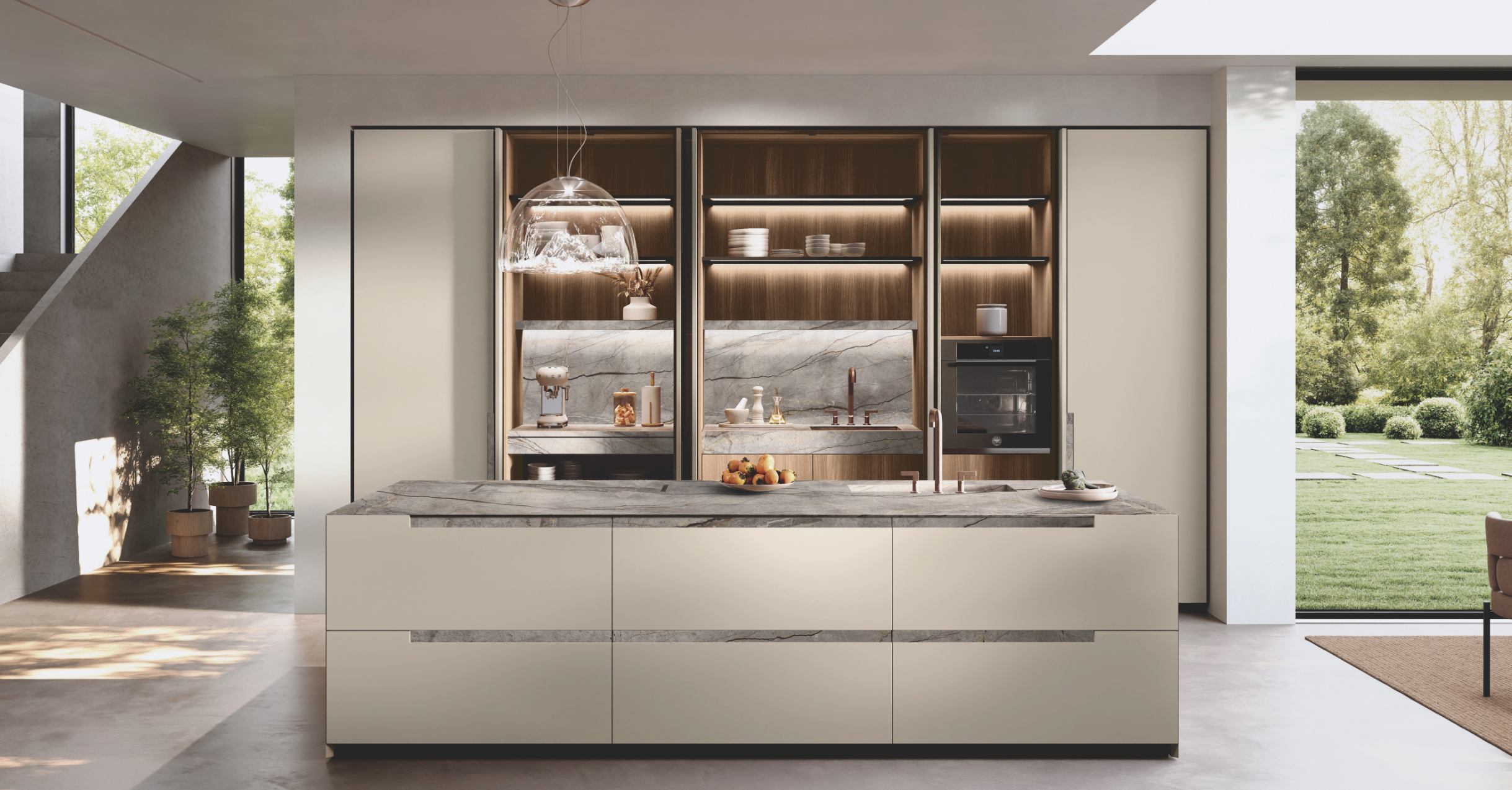
In modern kitchen design, the smallest details often carry the greatest impact. Binova’s Stone finger pulls are a clear example of this philosophy — a design element that removes the traditional handle altogether and instead integrates the act of opening into the architecture of the kitchen itself.
Rather than relying on external hardware, the Stone system uses a subtle horizontal recess built directly into the upper edge of the cabinetry. This creates a continuous, uninterrupted line across the kitchen façade, allowing the cabinetry to read as a single, cohesive surface.
What makes this detail particularly distinctive is its restraint. The handle is not meant to be seen as a feature, but rather experienced through use. It sits quietly within the design, preserving the purity of the cabinet fronts while still providing a comfortable and intuitive grip.
Material choice plays an important role in this integration. Depending on the specification, the recessed profile can be finished in coordinated tones such as matte stone-effect gres, lacquer, or wood veneer. This allows the finger pull to visually disappear into the surrounding surfaces, reinforcing the sense of unity across the kitchen composition.
From a functional perspective, the Stone finger pull is positioned for ease of use along the top edge of doors and drawers, making it particularly effective in larger cabinetry runs and kitchen islands. The result is a clean, ergonomic solution that avoids visual clutter while maintaining everyday practicality.
Beyond function, this detail contributes to the overall architectural language of the kitchen. By replacing protruding hardware with a carved-in gesture, the design achieves a more sculptural quality — one where light, shadow, and proportion define the space rather than applied elements.
Ultimately, the Stone finger pull system reflects a broader shift in contemporary kitchen design: moving away from decorative additions and towards integrated, architectural simplicity. It is a small intervention with a significant visual effect, allowing the kitchen to feel calm, refined, and deliberately composed.
There’s also a growing emphasis on flexibility. Outdoor kitchens are gaining traction, and interiors are becoming increasingly multifunctional, designed to shift with the needs of daily life rather than dictate them. The overarching idea is simple: spaces should adapt to us, not the other way around.
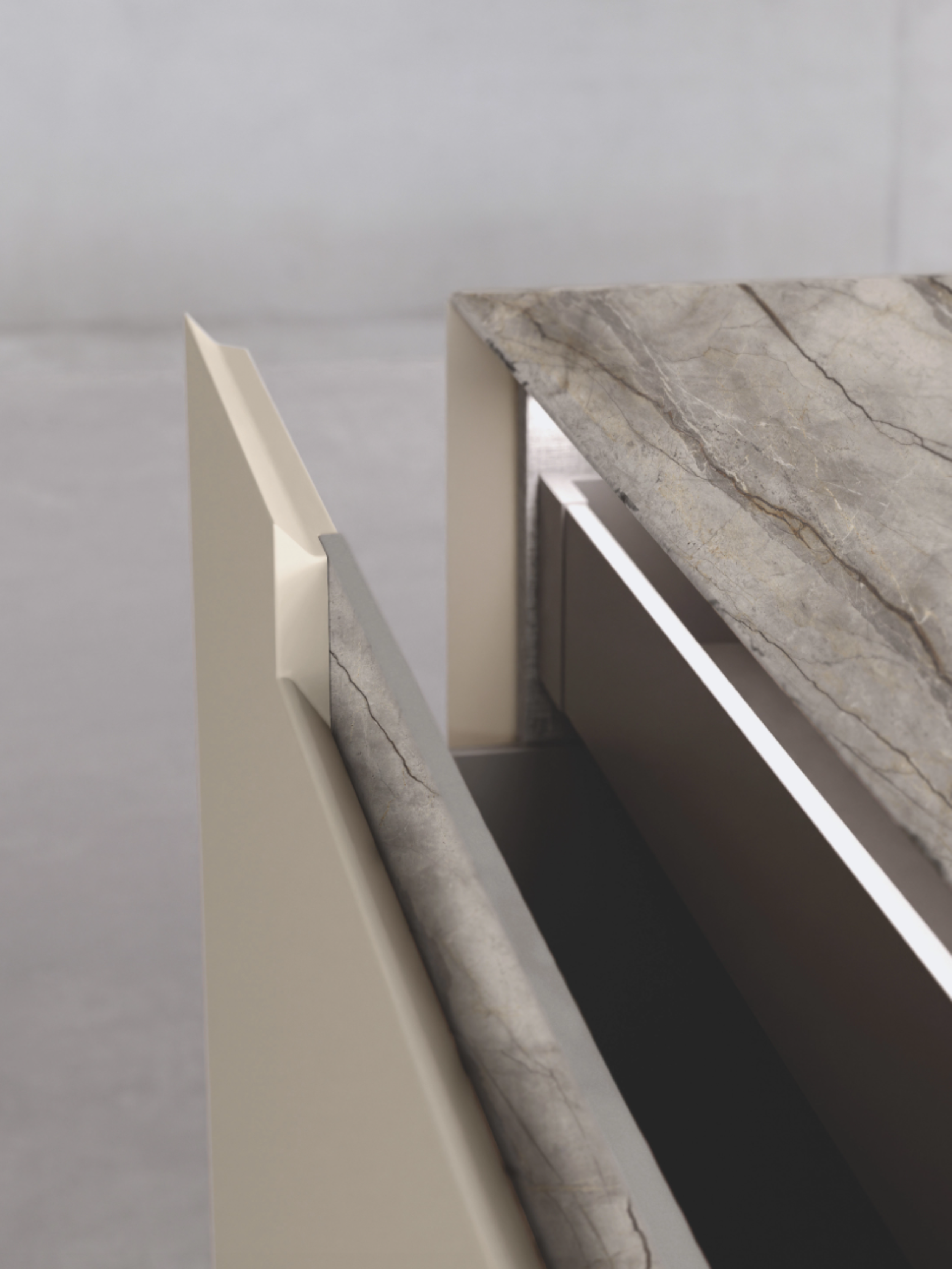
Image: Binova
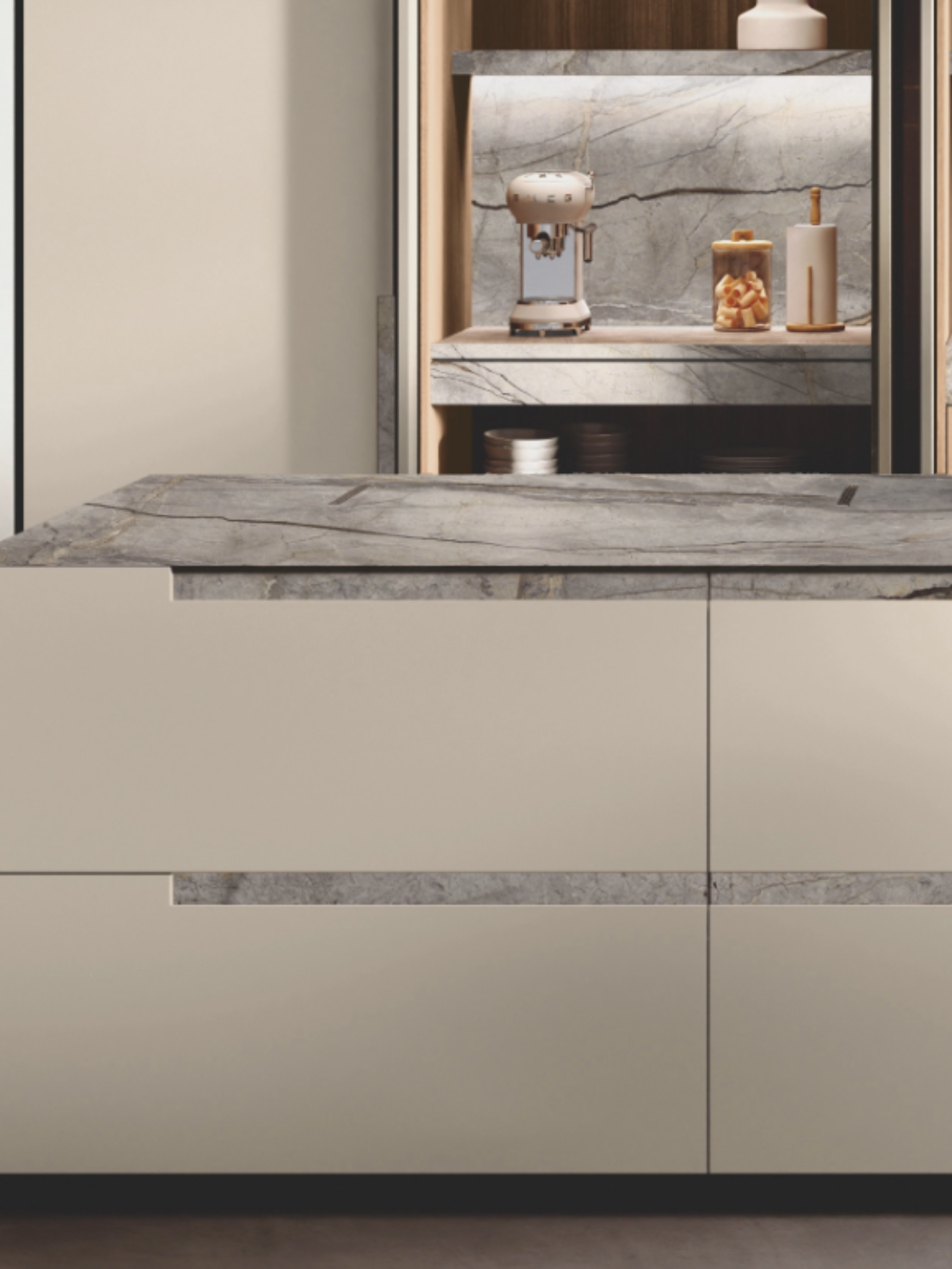
Image: Binova